Forensic diagnosis in transformers: Buchholz relay and pressure relief valve under IEEE C57.12.90 and IEC 60599 standards
Introduction and Fundamental Regulatory Framework
Oil-immersed power transformers represent the highest criticality node and energy concentration point within high-voltage transmission and industrial distribution electrical power systems. Upon the occurrence of an internal short circuit, a severe partial discharge, or a localized heating failure (hot spot), the energy released into the dielectric medium (generally naphthenic or paraffinic mineral oil, as well as alternative synthetic and natural fluids) triggers a violent thermal decomposition of the hydrocarbon molecules. This phenomenon results in oil pyrolysis and the degradation of the solid insulation cellulose, producing combustible and non-combustible gases () and high-velocity hydrodynamic pressure waves.
To mitigate catastrophic damage, tank explosions, and subsequent fires, comprehensive protection design mandates the integration of electromechanical defense and direct pressure relief devices. The Buchholz relay (in accordance with European standards and IEC philosophy) and the Pressure Relief Valve (PRV, standardized under IEEE C57.12.00, IEC 60076, and ASTM D3612) act as the first and last lines of physical defense during the transient regime of an internal fault.
The engineering design and forensic analysis of these devices require strict command over applicable international standards. The following table summarizes the international regulatory framework governing the construction, installation, testing, and diagnostics of power transformers and their mechanical protection systems:
| International Standard | Scope of Application and Technical Reach | Critical Parameters and Reference Limits |
|---|---|---|
| IEC 60076 (Parts 1 to 22) | General requirements, short-circuit testing, temperature rise, and accessories for power transformers. | Establishes mechanical withstand requirements of the transformer tank against dynamic and static overpressures. |
| IEC 60214 / IEEE C57.12.00 | Specification for On-Load Tap Changers (OLTC) and associated accessories, including dedicated Buchholz relays. | Oil flow trip sensitivity ($0.6$ m/s to $1.5$ m/s) and accumulated gas volume ( to ). |
| IEEE C57.12.10 / C57.12.20 | Standard requirements for liquid-immersed power transformers. | Design guidelines for the placement and calibration of Pressure Relief Valves (PRVs). |
| IEC 60599 / IEEE C57.104 | Guide for the interpretation of Dissolved Gas Analysis (DGA) in in-service mineral insulating oils. | Diagnostic criteria via Rogers ratios, Dornenburg method, and the Duval triangle. |
| ASTM D3612 / IEC 60567 | Standard test methods for analysis of gas content and dissolved gases in insulating oil. | Extraction via Gas Chromatography (GC) with parts-per-million () precision. |
Thermodynamic and Dynamic Fundamentals of the Buchholz Relay
The Buchholz relay is installed in the piping connecting the transformer main tank to the expansion tank (conservator). Its operating principle is founded on two distinct physical phenomena: the progressive accumulation of gases generated by incipient faults and the violent displacement of the dielectric fluid caused by pressure waves and massive fluid flow during severe arcing faults.
From the perspective of fluid thermodynamics, the thermal energy released by an AC short-circuit electric arc within the oil is modeled via the enthalpy of vaporization and the molecular dissociation of and bonds. The pressure generated at the fault locus propagates radially through the incompressible liquid. The volumetric flow rate traversing the piping toward the conservator is governed by the modified Bernoulli equation incorporating distributed and localized head losses:
Where is the density of the insulating oil (), represents the flow velocity, is the acceleration due to gravity, is the geodetic elevation difference, and denotes primary and secondary friction losses within the piping and the relay body.
Alarm Mechanism (First Stage)
The first stage of the Buchholz relay consists of an articulated upper float containing a mercury switch or a magnetic reed switch. In the event of low-energy incipient faults (such as sustained partial discharges, core heating due to interlaminar short circuits, or tap changer contact failures), the produced gases ascend via natural buoyancy through the inclined pipe. Upon becoming trapped in the upper chamber of the relay, they displace the oil volume downward. This causes the upper float to tilt, closing the alarm electrical circuit at a gas volume threshold typically comprised between and .
Trip Mechanism (Second Stage)
The second stage operates under a completely different hydrodynamic principle. It does not respond to static gas presence, but rather to the dynamic velocity of the oil flow (). When a severe three-phase or single-phase internal short circuit occurs, the oil volume thermally expands and travels at high velocity toward the expansion tank. This massive flow impacts directly against a baffle plate calibrated with a torsional antagonistic spring or counterweight. When the oil velocity exceeds the established trip threshold (typically between and ), the deflector rotates and actuates a second high-speed switch, issuing an irreversible trip command to the primary and secondary circuit breakers of the transformer.
Architecture and Dynamic Behavior of the Pressure Relief Valve (PRV)
When the energy generation rate of an internal electric arc exceeds the evacuation capacity of the conservator piping, the Buchholz relay proves insufficient to prevent the catastrophic deformation or violent rupture of the transformer tank. This is where the Pressure Relief Valve (PRV) intervenes—a spring-loaded, direct-acting mechanical device designed to open within milliseconds when the internal static pressure exceeds the design setting (generally comprised between and , or ).
The dynamic behavior of the PRV is modeled via Newton's second law applied to the valve plunger, taking into account the aerodynamic and hydrodynamic forces of the fluid, spring pre-load, and viscous damping:
Where is the moving mass of the plunger and sealing disc, is the oil damping coefficient, is the elastic constant of the helical spring, is the initial pre-load, is the plunger displacement, is the internal transient pressure, is the effective pressure area on the disc, and represents static and dynamic friction forces within the elastomeric sealing O-rings.
Once the transient pressure exceeds the spring force, the plunger lifts instantaneously, opening a wide perimeter area that permits the violent discharge of an oil, gas, and vapor mixture through the exhaust deflector. As soon as the internal pressure drops below the reset point, the high-fatigue spring returns the disc to its conical seat, compressing a secondary nitrile or fluorocarbon seal to prevent the ingress of atmospheric moisture into the transformer.
Forensic Diagnostic Methodology for Internal Faults
Forensic analysis of damaged power transformers requires a multidisciplinary forensic methodology combining metallurgical visual inspection, physical-chemical oil analysis, Dissolved Gas Analysis (DGA), and electrical winding evaluation. The physical state of the mechanical protection elements provides unambiguous clues regarding the nature of the event:
Forensic Interpretation of the Buchholz Relay
- Presence of non-combustible gas ( without hydrocarbon traces): Indicates a false positive due to oil degassing caused by abrupt temperature drops, initial problems in the vacuum pumping system during filling, or leaks within the conservator tank membranes.
- Highly flammable gas with a predominance of hydrogen () and acetylene (): Undeniable evidence of high-energy electrical discharges (electric arcs in the oil or dielectric ruptures in solid insulation).
- Predominance of carbon monoxide () and carbon dioxide () with ratios: Conclusively points to the severe thermal degradation of insulating paper cellulose within the windings (hot spots or turn-to-turn short circuits).
Forensic Interpretation of the Pressure Relief Valve (PRV)
- Activation of the PRV without a Buchholz trip: Suggests a high-speed short circuit localized very close to the main tank and far from the conservator piping, or a shock wave so rapid that the inertia of the flow toward the conservator blocked the Buchholz relay, forcing the PRV to open.
- Simultaneous trip of Buchholz and PRV: Characteristic of a high-power catastrophic failure (frank three-phase fault or On-Load Tap Changer explosion), where the released energy generates both a massive instantaneous pressure surge and a massive volume of gas and displacement flow.
Advanced Analysis with Vexten Suite: Short-Circuit Modeling and Thermal Response
To correlate mechanical events with the electrical parameters of the system, computational analysis is implemented via the calculation modules of the Vexten Suite, applying IEC 60909 for symmetrical and asymmetrical short-circuit currents and IEC 60287 for the thermal regime of conductors.
The initial symmetrical three-phase short-circuit current at the transformer terminals is calculated via the analytical expression:
Where is the voltage factor according to IEC 60909 ($1.05$ for low voltage, $1.10$ for high voltage), is the rated line-to-line system voltage, and is the total equivalent impedance at the fault location, composed of the supply network impedance () and the power transformer impedance ():
Where is the percentage short-circuit impedance, is the rated transformer voltage, and is its rated apparent power. This short-circuit current generates radial and axial electrodynamic forces on the transformer windings, modeled by the Ampère and Biot-Savart equation:
When these forces exceed the mechanical strength of the clamping blocks and winding supports, physical displacement of the turns occurs, generating a turn-to-turn short circuit that triggers oil pyrolysis and the subsequent activation of the Buchholz relay and the PRV.
Comparative Matrix of Failure Modes, Physical Signatures, and Forensic Diagnostics
The correlation between the electrical failure mode, the response of mechanical protection devices, and the physical-chemical signatures of the oil is detailed comprehensively in the following forensic diagnostic matrix:
| Internal Failure Mode | DGA Signature (IEC 60599) | Buchholz Relay Response | PRV Response | Dielectric and Mechanical Consequence |
|---|---|---|---|---|
| Turn-to-Turn Short Circuit (Low Energy) | High concentration of Ethylene () and Methane (). | Alarm activated by gradual gas accumulation in the upper chamber. | No opening (Pressure below calibration threshold). | Localized degradation of kraft paper; sludge formation and hot spots. |
| High-Power Electric Arc (Frank Three-Phase Fault) | Massive presence of Acetylene () and Hydrogen (). | Instantaneous trip of the second stage due to flow velocity exceeding . | Violent, immediate opening due to exceeding the static limit (). | Severe oil carbonization, winding destruction, and tank deformation. |
| Core Thermal Failure due to Interlaminar Short Circuit | Presence of Carbon Monoxide (), Methane, and Ethane in moderate proportions. | Alarm or slow trip depending on the heating rate of the magnetic core. | Inactive during thermal steady-state regime. | Elevated iron losses, partial melting of magnetic sheet insulation. |
| On-Load Tap Changer (OLTC) Explosion | Very high concentrations of Hydrogen, Acetylene, and Ethylene in the OLTC compartment. | Trip of the Buchholz relay dedicated to the OLTC compartment (if independent). | Opening of the OLTC head PRV to relieve convector overpressure. | Deterioration of switching contacts, contamination of barrier oil. |
Mitigation Strategies, Design, and Predictive Maintenance
To guarantee long-term operational reliability and prevent false tripping or uncontained catastrophic failures, the following advanced engineering guidelines must be implemented in the design and maintenance of power transformers:
Calibration and Periodic Testing of Mechanical Devices
Buchholz relays must undergo annual mechanical air-injection tests to verify the free travel of the floats, as well as simulated flow-injection tests to verify the trip threshold of the baffle plate. Likewise, the pressure relief valve must be tested using portable hydraulic test benches to certify that the opening pressure and subsequent sealing comply with manufacturer tolerances ().
Online Degassing Systems and DGA Monitoring
The implementation of online dissolved gas analysis (DGA) sensors coupled to SCADA platforms enables the detection of anomalous growth rates of key gases (such as acetylene and hydrogen) long before they reach the volume necessary to activate the Buchholz relay alarm. This transforms the maintenance strategy from corrective/preventive to a strictly predictive approach based on condition (Condition-Based Maintenance).
Engineering Conclusions
The Buchholz relay and the pressure relief valve constitute indispensable elements within the protection architecture of power transformers. Their correct phenomenological, thermodynamic, and hydrodynamic understanding empowers specialist engineers to perform precise forensic diagnoses in the face of internal failure events. The integration of data provided by these mechanical devices with chromatographic gas analysis (DGA) and computational short-circuit modeling using advanced tools such as Vexten Suite guarantees maximum operational availability, personnel safety, and the preservation of critical assets in high-voltage electrical grids.
Related diagnostic instruments
Measurement equipment commonly used to verify this scenario in the field.
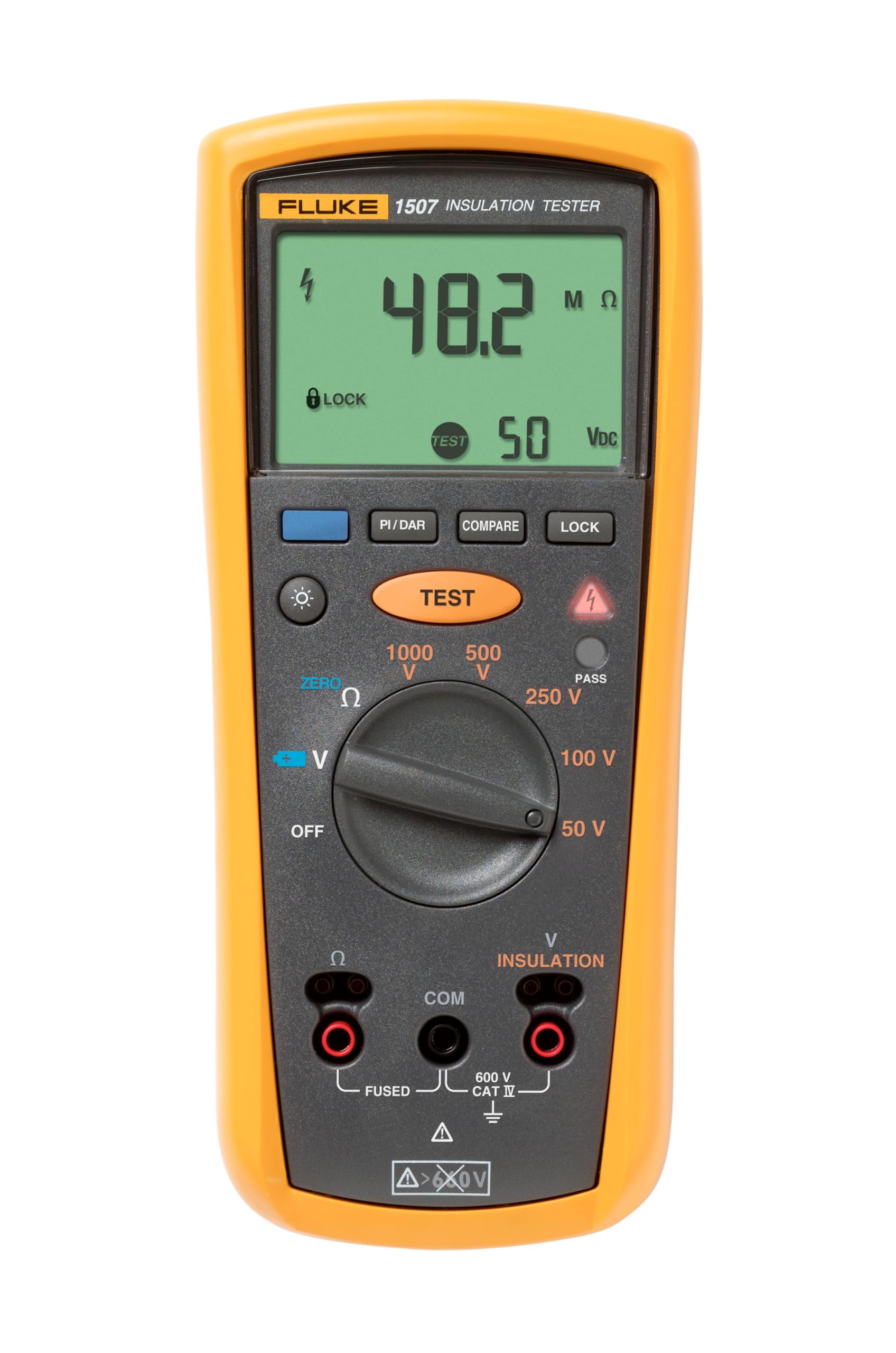
Fluke 1507 1000V Insulation Resistance Tester
Dielectric breakdown tests, PI and DAR calculations to 10 GΩ

FLIR C3-X Compact WiFi Thermal Camera
MSX imaging to pinpoint electrical hot spots & loose terminals
Related articles
Kraft paper degradation in transformers: Forensic DP analysis
The solid insulation in liquid-immersed power transformers is primarily constituted of Kraft cellulosic paper. From a macromole...
Ferroresonance and Metastable States in Inductive Potential Transformers Under Switching Operations
Ferroresonance in Inductive Voltage Transformers (IVTs) represents one of the most complex, highly non-linear, and destructive...
Diagnosis of interfacial polarization and dissipation factor (tan δ) in power transformers
Yesterday analyzing power factor test results on a 100 MVA autotransformer, an elevated dissipation factor indicated critical m...