Diagnosis of interfacial polarization and dissipation factor (tan δ) in power transformers
Electrodynamic Fundamentals and Phenomenology of Dielectric Polarization
The behavior of electrical insulation systems under the influence of intense electric fields, in both direct current (DC) and alternating current (AC) regimes, is governed by the microscopic interaction between the dipole moments of the materials and the applied electromagnetic field. In complex solid insulations (such as oil-impregnated pressboards/paper, cross-linked polyethylene [XLPE] polymers, and mineral-filled epoxy resins) and insulating liquids (naphthenic/paraffinic mineral oils, natural and synthetic esters), the dielectric response is neither instantaneous nor purely elastic. This response is described by the frequency-dependent complex permittivity :
Where represents the real permittivity (the capacity for electrostatic energy storage), is the imaginary permittivity (associated with dielectric losses caused by dipolar relaxation and molecular friction), and is the direct current electrical conductivity resulting from the motion of free charge carriers (dissolved ions, oxidation byproducts, residual moisture). Polarization within these heterogeneous media is composed of several characteristic kinetic mechanisms:
- Electronic Polarization: Ultra-fast displacement of the electron cloud relative to the atomic nucleus. It occurs at optical and ultraviolet frequencies (), with a relaxation time on the order of femtoseconds, contributing infinitesimally to industrial power losses while constituting the baseline value of optical permittivity.
- Atomic Polarization: Relative displacement of atomic nuclei within molecules under the action of the electric field, with characteristic frequencies in the infrared range (). Its contribution to total permittivity is typically less than 5% in polymeric and cellulosic insulating materials.
- Orientational or Dipolar Polarization: Present in molecules possessing a permanent dipole moment (e.g., dissolved water, polar aging byproducts in oils, polar groups in polymer chains). Under an alternating electric field, the dipoles rotate to align with the field, experiencing viscous or frictional resistance from the surrounding medium, which generates energy dissipation highly dependent on temperature and frequency.
- Interfacial or Maxwell-Wagner-Sillars (MWS) Polarization: A critical phenomenon in composite insulation. It occurs at the interfaces between materials with differing permittivities () and conductivities (). Charge carriers migrate through the bulk volume until they become trapped at heterogeneous boundaries (for example, between cellulose fibers and insulating oil in a power transformer, or between the semiconductor screen and XLPE insulation in an underground cable), accumulating macroscopic space-charge densities that generate severe local electric field distortions.
The Maxwell-Wagner interfacial relaxation time for a simplified bilayer system is rigorously defined by the ratio between the permittivities and conductivities of the constituent media:
Where and represent the relative thicknesses of the dielectric layers, and is the vacuum permittivity (). This interfacial polarization dominates the dielectric response spectrum in extremely low frequencies (ELF) and millihertz-to-hertz ranges, forming the physical core of modern diagnostic techniques such as Frequency Domain Spectroscopy (FDS) and Return Voltage Measurements (RVM).
Mechanics of Dielectric Losses and the Dissipation Factor ()
When an imperfect dielectric is subjected to a sinusoidal alternating electric field , the resulting displacement current does not lead the applied voltage by exactly 90 degrees. There exists a current component in phase with the voltage, originating from energy losses associated with dielectric hysteresis and internal ohmic conduction. The angle between the total current vector and the pure capacitive current component is defined as the loss angle , whose trigonometric operator, the dissipation factor or loss tangent (), is expressed via the phasor diagram as:
The active power losses dissipated as heat per unit volume within the insulating material are directly coupled to this parameter via the fundamental equation of material media electrodynamics:
Where is the geometric capacitance of the insulation system in a vacuum and is the applied root-mean-square (RMS) voltage. This internal thermal dissipation is the driver of the dielectric thermal instability phenomenon. If the heat generation rate exceeds the thermal dissipation capacity of the insulation toward the surrounding environment, the material temperature increases. Given that and conductivity possess a positive exponential thermal coefficient (following the Arrhenius law), the temperature rise elevates losses, accelerating heating until catastrophic insulation destruction occurs via thermal puncture.
In the time domain, system response is analyzed via the discharge current or polarization current induced by a voltage step . The total current circulating through the insulation is modeled by the Curie-von Schweidler function:
Where is a material-dependent constant, is the relaxation exponent (typically between 0.3 and 1.2), and is the Dirac delta function. The dissipation factor is directly related to this temporal response function through the Fourier transform, allowing specialist engineers to correlate insulation resistance tests (such as the Polarization Index [PI] and Dielectric Absorption Ratio [DAR]) with direct measurements at 50/60 Hz.
Forensic Failure Analysis in Critical High-Voltage Assets
The degradation of insulation systems is an irreversible physicochemical process manifested through measurable alterations in permittivity and the dissipation factor. The following forensic matrix details the critical correlations between field failure mechanisms and their dielectric signatures in transformers, cables, and switchgear.
| Critical Asset | Degradation / Failure Mechanism | Dielectric Signature ( & Permittivity) | Normative Limits (IEEE / IEC) | Operational and Catastrophic Consequence |
|---|---|---|---|---|
| Power Transformers (Paper-Oil) | Cellulose hydrolysis and oxidation combined with moisture contamination (>2.5%) and organic acids. | Drastic increase in (>0.5% at 20°C, >2.0% at 90°C) and increase in due to MWS polarization. | IEEE C57.12.90 / IEC 60247: at 20°C (New oil), < 0.05 (Critical service). | Loss of dielectric strength, disruptive discharge between windings, sludge formation, and sudden failure via internal arcing. |
| Medium/High Voltage Underground Cables (XLPE) | Electrical trees and electrochemical water trees caused by moisture and local impurities. | Severe non-linearity in voltage-dependent measurements ( between and ). | IEEE 400.3 / IEC 60502: Stable tip-up levels of . | Single-phase or three-phase short-circuit due to polymeric insulation puncture under transient switching overvoltages. |
| GIS (Gas Insulated Switchgear / SF6 or Alternatives) | Contamination by free metallic particles and decomposition via residual moisture on solid supports (Epoxy/Alumina). | Localized elevation of in epoxy resin supports and recurring partial discharges in spacers. | IEC 62271-203 / IEEE C37.122: Absence of detectable partial discharges (>5 pC) and . | Flashover to ground along conical spacers, destruction of the gas compartment, and total substation outage. |
| Shunt Power Capacitors | Aging of polypropylene film dielectric impregnated in synthetic dielectric fluid (Bistearyl, M/DBT). | Asymmetric increase in effective capacitance and elevation of the loss factor due to partial layer breakdown. | IEC 60871-1 / IEEE 18: Initial ; mandatory removal if or if doubles its factory value. | Uncontrolled overheating, expansion of the metallic enclosure, operation of internal fuses, and explosion risk. |
Design, Mitigation, and Advanced Mitigation Strategies
To counteract the deleterious effects of interfacial polarization and minimize dielectric losses in the design of high-voltage grids and power equipment, engineers must implement rigorous physical-mathematical strategies. Mitigation is divided into three fundamental technological axes:
Optimization of Electrostatic Gradients in Multilayer Insulations
In systems composed of series dielectrics (such as cable insulation with semiconductor layers, XLPE, and metallic shields), the electric field is distributed inversely to their relative permittivities under transient regimes, and inversely to their conductivities under steady-state regimes. To prevent field line concentrations that trigger partial discharges, electric field grading design equations are applied:
The use of controlled capacitive grading via the introduction of coaxial metallic capacitive screens or metallized papers in high-voltage bushings (capacitive bushings) guarantees that the potential drop is distributed equitably, minimizing local dielectric stress below the ionization threshold of the medium.
Physicochemical Treatment and Degasification in Insulating Liquids
Dielectric losses in mineral oils and esters are strongly correlated with the concentration of dissolved polar contaminants (volatile organic compounds, naphthenic acids, oxidation byproducts, and water traces). The design of predictive and preventive maintenance systems requires the implementation of rigorous processes:
- High-Vacuum Thermal Treatment (Deaeration & Dehydration): Reduction of dissolved moisture concentration below 5 ppm in ultra-high voltage (UHV) transformers, eliminating ionic bridges that increase conductivity .
- Molecular Filtration and Active Earths: Neutralization of the Total Acid Number (TAN) below , preventing the formation of metallic soaps and polar complexes that exponentially elevate the dissipation factor at industrial frequencies.
Harmonic Mitigation and Dielectric Stress Reduction in Cables (IEC 60287 / NEC 310 Standards)
The presence of harmonic currents in industrial distribution networks generates supplementary Joule-effect losses in conductors, elevating the operating temperature of the surrounding insulation. Given that the dissipation factor is strongly temperature-dependent according to a modified Arrhenius relationship:
The thermal rise induced by high-frequency harmonics compounding increases internal dielectric losses. This requires the application of current-carrying capacity derating factors based on IEC 60287 for steady-state temperature evaluation:
Where represents the total dielectric losses given by . In high-voltage cables operating at distorted frequencies, the verification of is mandatory to prevent thermal collapse of the polymeric insulation.
Practical Applications and Engineering Analysis with Vexten Suite
To illustrate the application of the theoretical principles presented, a case study solved via the advanced calculation routines of the Vexten Suite platform is introduced, integrating international standards IEC 60909 / IEEE 141 for short-circuit and dielectric analysis.
Case Study: Dielectric and Thermal Evaluation of a 220 kV Step-Up Transformer
A renewable generation substation operates a three-phase step-up transformer rated at , , featuring a paper-mineral oil insulation system. During annual maintenance routines, an oil sample is extracted and subjected to Frequency Domain Spectroscopy (FDS) using the diagnostic tool integrated into Vexten Suite. Experimental results show a dissipation factor measured at and , exceeding the critical industrial acceptance limit for continuous service established at .
The analytical calculation engine of Vexten Suite processes the complex permittivity spectrum data to determine the equivalent moisture in the solid insulation paper and the ionic conductivity of the oil, applying the extended Debye physical model:
Where the frequency exponent (typically between 0.9 and 1.0) characterizes the contribution of MWS interfacial polarization due to aging. The software executes coupled thermal simulation (IEC 60076-7) by inputting the measured value of into the dielectric heat dissipation equation:
This internal dissipation of over exclusively in the form of dielectric heat within the main insulation generates an internal hot spot that accelerates cellulose degradation, reducing the remaining life of the transformer from an estimated 15 years down to less than 1.8 operating years.
As a corrective action stipulated by the Vexten Suite mitigation module, it is recommended to:
- Execute an on-line/off-line high-vacuum thermal treatment process on site to reduce water content in the oil below and extract polar byproducts via fuller's earth columns.
- Verify short-circuit impedance using the IEC 60909 algorithm to ensure that electrodynamic forces under external faults do not compromise the weakened insulation:
- Establish permanent on-line monitoring of the dissipation factor and differential capacitance () via capacitive sensors coupled to the high-voltage bushings, preventing catastrophic failure due to dielectric thermal instability in the transmission grid.
This comprehensive approach—combining the physics of interfacial polarization, rigorous dielectric loss analysis, forensic modeling, and the use of advanced engineering tools such as Vexten Suite—guarantees reliability, safety, and operational availability for critical assets in global electric power infrastructures.
Related diagnostic instruments
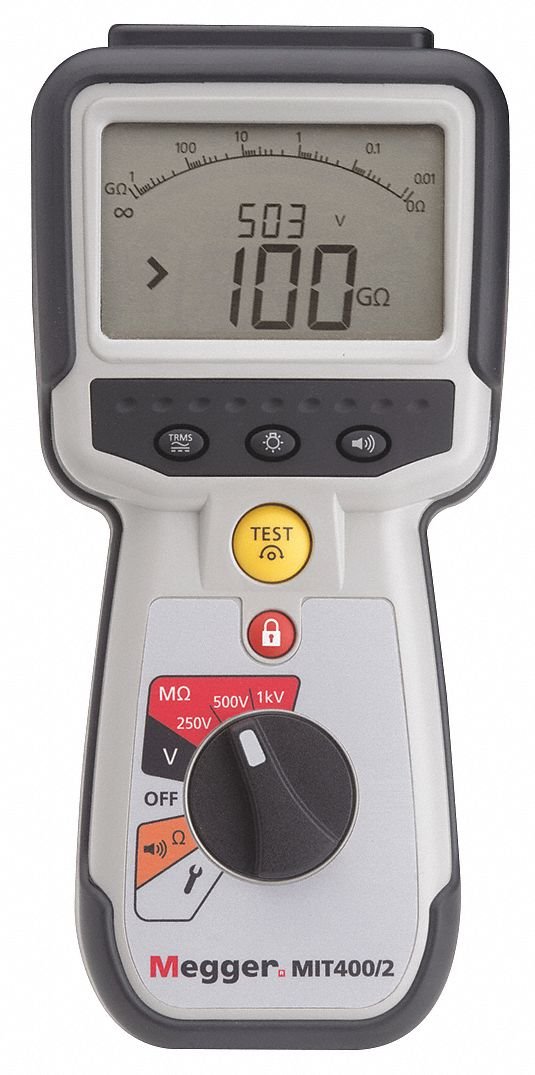
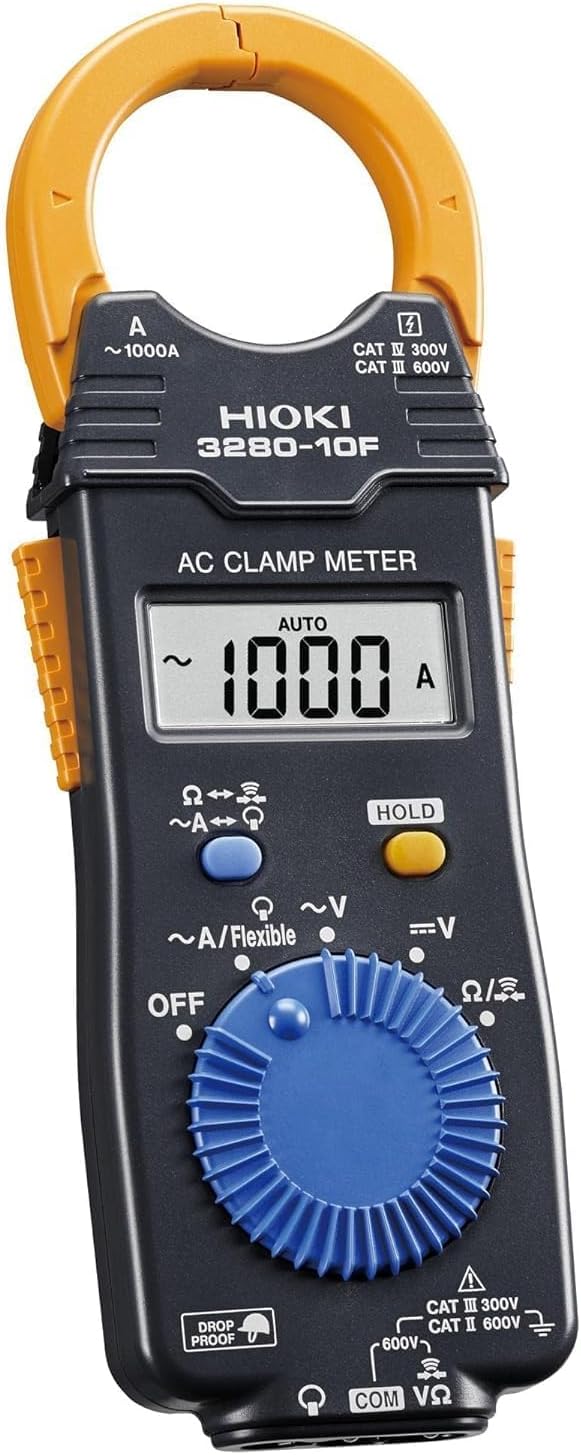
Measurement equipment commonly used to verify this scenario in the field.
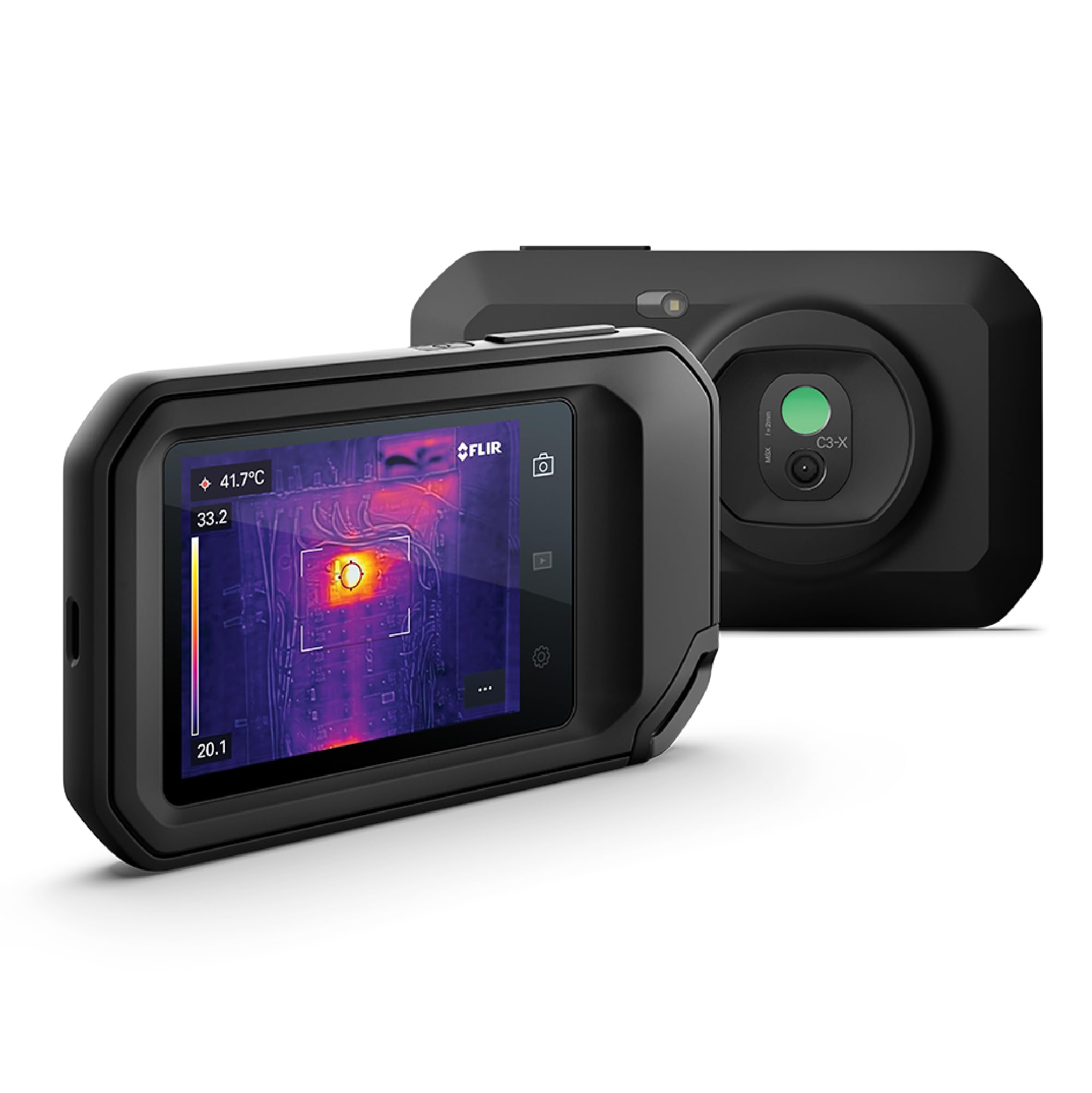
FLIR C3-X Compact WiFi Thermal Camera
MSX imaging to pinpoint electrical hot spots & loose terminals
Related articles
Thermal management and power dissipation in closed enclosures
The thermal design of unventilated electrical enclosures (purely passive heat transfer systems classified under the IEC 61439 s...
Forensic diagnosis in transformers: Buchholz relay and pressure relief valve under IEEE C57.12.90 and IEC 60599 standards
During the post-failure inspection of a 40 MVA 138/13.8 kV power transformer, the simultaneous tripping of the Buchholz relay a...
Dynamic Short-Circuit Withstand Forces in Power Transformers per IEC 60076-5
In-depth engineering guide on the dynamic short-circuit withstand forces in power transformers per IEC 60076-5. Analysis of rad...