Thermal Runaway in Medium Voltage Cable Joints due to Mechanical Relaxation and Load Cycling
Physics of Thermal Runaway in Medium Voltage Cable Joints
A medium voltage cable joint is a critical component whose integrity depends on a perfect balance between mechanical, thermal, and electrical stresses. When an XLPE or EPR cable carries variable current, it experiences cyclic thermal expansion and contraction. If the internal metal connector (whether compression or shear-bolt type) exhibits high initial contact resistance due to poor installation or mechanical relaxation, an accelerated thermal degradation process begins.
The power dissipation at the connector is governed by the ohmic contact resistance, which consists of constriction resistance and surface oxide film resistance. The power dissipated locally is expressed as:</p
As the local temperature rises, the contact pressure decreases due to mechanical creep of the connector metal, which in turn increases the contact resistance. This positive thermal-mechanical feedback loop inevitably leads to the breakdown of the surrounding dielectric insulation.
Degradation Mechanisms of Polymer Insulation
The localized temperature rise directly affects the elastomeric body of the joint (silicone or EPDM). Once the maximum design temperature of the XLPE for short-circuit (250 °C) or even continuous overload (130 °C) is exceeded, the polymer undergoes depolymerization and loss of dielectric strength. The relative permittivity and loss factor (tan δ) increase non-linearly, elevating dielectric losses and accelerating dielectric breakdown by electrical arcing.
| Physical Parameter | Nominal Value (XLPE) | Degradation / Failure Condition |
|---|---|---|
| Continuous Operating Temperature (°C) | 90 °C | > 105 °C (Accelerated life reduction) |
| Transient Overload Temperature (°C) | 130 °C | > 150 °C (Severe plastic deformation) |
| Connector Contact Resistance (μΩ) | < 10 μΩ | > 150 μΩ (Onset of thermal runaway) |
| Body Dielectric Strength (kV/mm) | > 20 kV/mm | < 5 kV/mm (Imminent puncture) |
Regulatory Compliance: IEC 60502-4 and IEEE 404
International standards require that joints installed in power systems comply with rigorous type tests. The IEC 60502-4 standard specifies thermal load cycle tests where the cable-joint assembly is subjected to current-induced heating cycles to reach the maximum conductor temperature plus 5 °C under operating voltage. On the other hand, the IEEE 404 standard details the requirements for extruded cable joints, demanding power frequency withstand voltage, impulse voltage, and partial discharge tests to validate the thermal and electrical stability of the connection.
Mitigation and Ampacity Analysis with Vexten
To prevent catastrophic failures in medium voltage joints, it is imperative to perform a precise calculation of conductor ampacity and derating factors due to grouping and soil thermal resistance under reference standards. The Vexten engineering suite features a powerful Conductors and Ampacity module based on NEC 310 and IEC 60287 standards. This tool allows verification of the continuous current-carrying capacity of cables and evaluates the impact of underground installation conditions on conductor operating temperature, helping engineers avoid thermal overloads that accelerate mechanical relaxation in medium voltage connections.
Related diagnostic instruments
Measurement equipment commonly used to verify this scenario in the field.
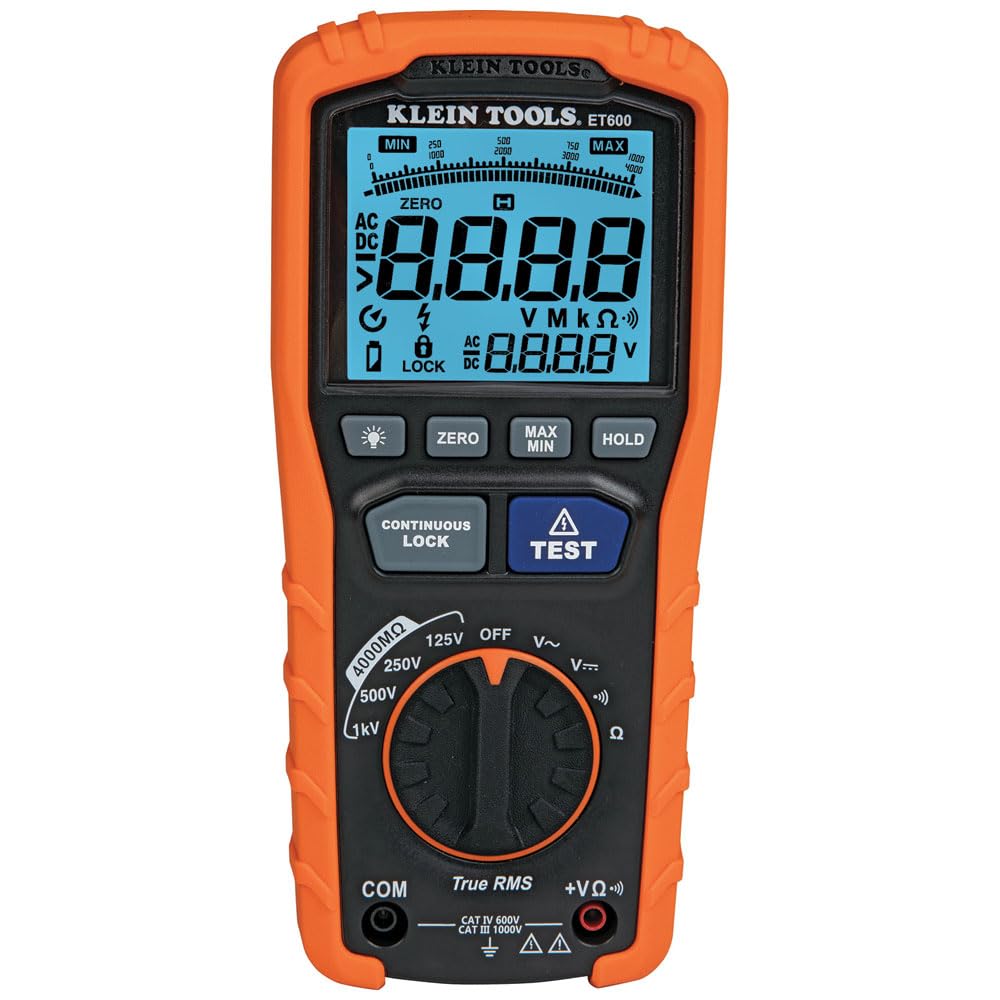
Klein Tools ET600 Digital Megohmmeter Tester
Budget-friendly 125V to 1000V insulation resistance tests

FLIR C3-X Compact WiFi Thermal Camera
MSX imaging to pinpoint electrical hot spots & loose terminals
Related articles
Short-Circuit Thermal Ampacity in Medium Voltage Cables according to IEC 60949
Learn how to calculate transient short-circuit thermal ampacity in medium voltage cables according to IEC 60949 to prevent cata...
Skin and Proximity Effects in Medium Voltage Cables: Thermal Impact and Standards
Technical analysis of skin and proximity effects in MV cables. Impact on ampacity per IEC 60287 and mitigation of thermal losse...
Dielectric Failure and Electric Field Control in Medium Voltage Cable Terminations
Technical analysis of dielectric failure in medium voltage cable terminations due to poor electric field control, examining phy...