Thermal Degradation of MOV Varistors in SPDs Under Sustained Temporary Overvoltages (TOV)
Introduction and Fundamental Regulatory Framework
Metal Oxide Varistor (MOV)-based Surge Protective Devices (SPDs) constitute the critical first line of defense within medium- and low-voltage electrical architectures. These components operate as voltage-dependent variable impedance elements designed to switch from a nominal high-impedance state to a quasi-short-circuit conduction state during high-energy transient events, such as direct or indirect atmospheric discharges (lightning strikes) and switching surges within distribution networks. However, their performance and service life expectancy are drastically threatened when the electrical system is subjected to sustained Temporary Overvoltages (TOV). TOVs are defined as long-duration power-frequency voltage oscillations (ranging from several tens of cycles to hours or days), originated by asymmetrical earth faults, load rejections, ferroresonant resonances, or severe phase unbalances in ungrounded or impedance-grounded three-phase networks.
From the perspective of forensic engineering and advanced normative design, understanding the thermodynamics and electrochemistry of MOV degradation under sustained TOVs is an imperative requirement for design engineers. Contemporary international standards, specifically the IEC 61643 series and IEEE C62.11 standard, establish testing frameworks to determine the TOV withstand capability (). Nevertheless, in industrial practice, field conditions frequently exceed the design margins stipulated in the laboratory. Continuous exposure of an MOV to an alternating voltage exceeding its threshold reference voltage () induces a permanent resistive leakage current. This current generates power dissipation losses within the polycrystalline matrix of zinc oxide (), triggering an accumulative phenomenon known as "thermal runaway," which inevitably culminates in the catastrophic destruction of the device, the loss of system continuity, and, in severe scenarios, the ignition of surrounding materials due to prolonged electrical arcing.
Microstructural Architecture of the MOV and Solid-State Physics
The active element of a metal oxide varistor is a complex polycrystalline ceramic manufactured through advanced powder metallurgy and high-temperature sintering techniques. The majority phase is composed of semiconducting zinc oxide () grains doped with a precise stoichiometric concentration of additive metal oxides, predominantly bismuth (), antimony (), cobalt (), manganese (), and nickel (). During the liquid-phase sintering process, these additives segregate toward the grain boundaries, forming a continuous network of highly resistive intergranular layers of approximately micrometric or sub-micrometric thickness.
The characteristic electrical non-linearity of the MOV, empirically expressed by the power law:
where is the current through the varistor, is the instantaneous voltage drop, is a constant dependent on the geometry and dimensions of the device, and is the non-linearity coefficient (reaching values between 30 and 60 in high-quality devices), finds its physical explanation in the double Schottky potential barrier theory at the grain boundaries. Under normal operating conditions, when the voltage applied across a grain boundary is lower than the intrinsic barrier potential (), the space-charge region (depletion zone) at the grain-to-grain boundary interface prevents the free flow of charge carriers (electrons).
Mathematically, the low-voltage leakage current density is governed by field-assisted thermionic emission:
where is the modified Richardson constant, is the absolute temperature in Kelvin, is the Boltzmann constant, is the electric field applied across the grain boundary, and is the barrier-lowering factor induced by the electric field. When a sustained TOV increases the electric field above the operating threshold, the reduction of the Schottky barrier allows a significant electron current to cross the interface continuously. This steady-state power dissipation is calculated through the time integral of the voltage and leakage current:
If this generated power exceeds the thermal dissipation capacity of the ceramic body and its encapsulation toward the surrounding environment, an unstable thermodynamic cycle is initiated.
Thermodynamic Mechanisms of Degradation and Thermal Runaway
The thermal runaway phenomenon induced by sustained TOVs is a highly non-linear coupled electro-thermal process. The electrical conductivity of zinc oxide in the pre-breakdown regime exhibits a strongly positive temperature coefficient at voltages close to or exceeding the knee of the voltage-current characteristic. As the core temperature of the MOV increases due to the losses , the effective height of the potential barrier decreases and the thermal energy available for carrier activation increases exponentially, as described by the Arrhenius equation applied to intergranular conductivity:
where represents the activation energy of point defects at the grain boundary (typically charged oxygen vacancies and bismuth complexes). As increases, the leakage current at the same applied voltage experiences accelerated exponential growth, further elevating .
The dynamic thermal equilibrium of the MOV is governed by the transient heat transfer differential equation:
where is the specific heat capacity of the varistor disk, is the equivalent thermal resistance between the MOV core and the ambient medium (including the plastic or epoxy resin encapsulation and connection terminals), and is the ambient temperature. If the thermal stability condition is violated—that is, when the heat generation rate exceeds the maximum thermal dissipation rate:
the system enters an uncontrollable thermal runaway regime. The temperature of the MOV core can escalate from nominal operating values () to critical phase-transition and chemical-decomposition temperatures of bismuth oxide () within minutes or seconds. At this point, the ceramic structure undergoes severe mechanical cracking due to internal thermal stresses, total loss of non-linear properties, and a transition to a low-impedance resistive short circuit.
Comparative Analysis of International Standards and Behavior under TOV
The international standards IEC 61643-11 and IEEE C62.11 establish rigorous testing protocols to verify the behavior of SPDs against temporary overvoltages (earth-fault TOVs and operational TOVs). Below is an exhaustive comparative table detailing critical electrical parameters, normative limits, and associated dielectric consequences.
| Electrical Parameter / Test | IEC 61643-11 Limit / Requirement | IEEE C62.11 Limit / Requirement | Operational and Dielectric Consequence under Sustained TOV |
|---|---|---|---|
| Maximum Continuous Operating Voltage ( / MCOV) | Maximum root-mean-square (RMS) voltage that may be permanently applied to the SPD protection mode. | Maximum Continuous Operating Voltage (MCOV). Maximum voltage that may be continuously applied. | Exceeding or MCOV continuously increases the leakage current above thermal stability limits. |
| Fault TOV Voltage (Safety TOV, ) | Test at for 5 seconds or for 120 minutes (depending on the network scheme). | Energy absorption capacity and TOV withstand tests based on ferroresonant temporary overvoltage profiles. | If the MOV is not oversized, it experiences uncontrolled leakage current, leading to thermal failure or internal disconnector opening. |
| Nominal Standby Leakage Current () | Typically lower than at for modern high-density disks. | Rigorous control of the resistive component of leakage current during accelerated aging tests. | A sustained increase of exceeding 3 times its initial value indicates irreversible microstructural degradation. |
| Safe Failure Mode (Disconnecting Mechanism) | The SPD must disconnect safely from the network (without risk of fire, explosion, or flame emission) upon thermal failure. | Short Circuit Current Rating (SCCR) testing requirements and operation of thermal fuses/disconnectors. | Failure of the thermal disconnector under low-current, long-duration TOV can result in terminal melting and damage to the electrical panel. |
Forensic Engineering and Fault Analysis in Power Systems
When an SPD experiences a sustained TOV event not adequately mitigated by system design, systemic consequences propagate through the electrical infrastructure, affecting transformers, power cables, medium-voltage switchgear, and low-voltage switchboards. Post-fault forensic analysis reveals characteristic patterns in the damage morphology of MOVs.
First, distribution transformers fed by ungrounded or compensated neutral networks experiencing intermittent single-phase-to-ground faults generate ferroresonance conditions. These non-linear oscillations involve the saturable magnetizing inductance of the transformer and the distributed capacitance of underground cables, producing sustained TOVs with a rich harmonic content (primarily sub-harmonic and odd-order harmonic components, such as the 3rd, 5th, and 7th harmonics). SPDs connected to the secondaries of such transformers absorb these overvoltages through continuous conduction cycles. Metallurgical analysis of the recovered MOV disk typically shows localized dielectric perforation ("pinhole puncture") or transverse thermomechanical fracture, where localized thermal shock melts the silver of the surface electrodes and partially volatilizes the bismuth oxide at the grain boundaries.
Second, power cable systems experience an increase in dielectric losses when subjected to sustained TOVs combined with harmonic distortion. If the associated SPD thermally degrades and enters a high conduction resistance state before fully opening, it acts as a parasitic non-linear load consuming current asymmetrically. This causes overheating in the busbars of the main distribution switchboard and can compromise the insulation integrity of surrounding cables due to conductive and radiative thermal coupling.
Finally, medium-voltage switchgear and low-voltage switchboards with inadequate protections suffer severe collateral damage. The explosion or deflagration of an MOV subjected to uncontrolled thermal runaway generates an internal pressure wave and high-temperature ionized gases that can initiate an internal electrical arc (arc flash) within the switchboard, destroying adjacent equipment and posing a lethal hazard to operating personnel.
Advanced Design and Mitigation Strategies
To effectively mitigate the risk of deterioration and catastrophic failure of MOVs in SPDs due to sustained TOVs, the design engineer must implement a combination of advanced component selection criteria, network topological design, and protection coordination. The following analytical and mathematical strategies guide the engineering process:
Rigorous Selection of Continuous Operating Voltage ( / MCOV)
The first level of defense consists of selecting an SPD whose nominal continuous operating voltage widely exceeds the maximum phase-to-phase or phase-to-neutral voltage expected during predictable TOV conditions in the network. In low-voltage systems according to IEC 60364-4-44 guidelines, neutral potential rise profiles due to phase loss must be evaluated. The sizing relationship is expressed by the following safety condition:
where is the nominal root-mean-square phase-neutral voltage of the network and is the system's characteristic temporary overvoltage factor (typically for TN/TT systems with a TOV duration of 120 minutes, and up to or for IT systems or networks with severe asymmetrical faults).
Implementation of Hybrid Protection Topologies (MOV + GDT)
In critical industrial applications where low-amplitude sustained TOVs coexist with high-energy transients, the exclusive use of MOVs can result in silent premature degradation. The advanced engineering solution consists of implementing hybrid topologies combining metal oxide varistors in series with Gas Discharge Tubes (GDTs):
The GDT acts as a high-impedance galvanic isolation switch under low-voltage sustained TOV conditions, blocking the flow of permanent parasitic leakage currents through the MOV. Only when the transient voltage exceeds the striking threshold of the GDT do both elements enter coordinated conduction, protecting the MOV from cumulative thermal degradation caused by long-duration TOVs.
Practical Application and Analysis via Vexten Suite
To illustrate the application of theoretical and normative concepts in a real engineering environment, a calculation analysis executed with the Vexten Suite design platform is presented, integrating the IEC 60909 short-circuit modules, IEC 60287 / NEC 310 cable sizing with harmonic derating factors, and resonance and power factor mitigation analysis.
Consider an industrial Medium-to-Low Voltage substation (, Dyn11, , short-circuit impedance ) feeding a plant with highly non-linear loads (variable frequency drives and industrial rectifiers). The presence of these loads introduces voltage and current harmonic distortion, with a total demand current harmonic distortion () of .
The IEC 60909 short-circuit calculation engine in Vexten Suite determines the initial symmetrical three-phase short-circuit current at the low-voltage main switchboard:
Under this high short-circuit power scenario, the SPD installed in the main switchboard must possess a Short Circuit Current Rating (SCCR) greater than to prevent device explosion in the event that a sustained TOV induces a thermal failure with a solid closure of the MOV.
Simultaneously, the IEC 60287 cable sizing module of Vexten Suite evaluates the thermal impact of harmonics generated by the TOV and wave distortion on XLPE-insulated copper feeder conductors. The harmonic content correction factor () is calculated via the supplementary losses relationship:
For a and a skin and proximity effect factor , the cable ampacity (current-carrying capacity) reduction factor is determined to be . The software automatically adjusts the required cross-sectional area of the feeder cable to prevent premature insulation aging caused by the thermal superposition of the fundamental current, harmonic currents, and induced losses from the proximity of SPDs under high thermal leakage regimes.
Finally, the power factor and resonance mitigation analysis module of Vexten Suite evaluates the network impedance as a function of frequency to prevent ferroresonance conditions induced by power factor correction capacitor banks operating in conjunction with unloaded transformers. The parallel resonant frequency of the system is calculated as:
If coincides with a characteristic harmonic (for example, the 5th harmonic at in systems, or / in systems), severe voltage amplifications occur, degenerating into long-duration sustained TOVs. Vexten Suite recommends the installation of detuned reactors with a tuning of (resonant frequency of for networks or for networks), shifting the resonant frequency below the lowest harmonic order present in the system (5th), thereby guaranteeing network operational stability, comprehensive SPD protection against sustained TOVs, and the preservation of the service life of critical electrical infrastructure assets.
Conclusions and Engineering Recommendations
The deterioration of metal oxide varistors in SPDs due to sustained temporary overvoltages (TOVs) is a destructive physico-chemical process governed by thermal instability at the ceramic grain boundaries. Analytical oversizing of the parameter (MCOV) in accordance with real network asymmetry conditions, the adoption of advanced hybrid topologies (MOV + GDT), and the use of rigorous electrical modeling tools like Vexten Suite for harmonic, short-circuit, and resonance analysis are indispensable engineering practices to ensure reliability, selectivity, and operational safety in mission-critical electrical installations.
As a final design guideline, it is recommended that every medium- and low-voltage industrial electrical project incorporate a dynamic TOV and electromagnetic transient study, ensuring that surge protective devices not only comply with the minimum laboratory standards of IEC and IEEE specifications, but also possess an adequate thermal tolerance margin against the most severe operational contingencies of the real system.
Related diagnostic instruments
Measurement equipment commonly used to verify this scenario in the field.
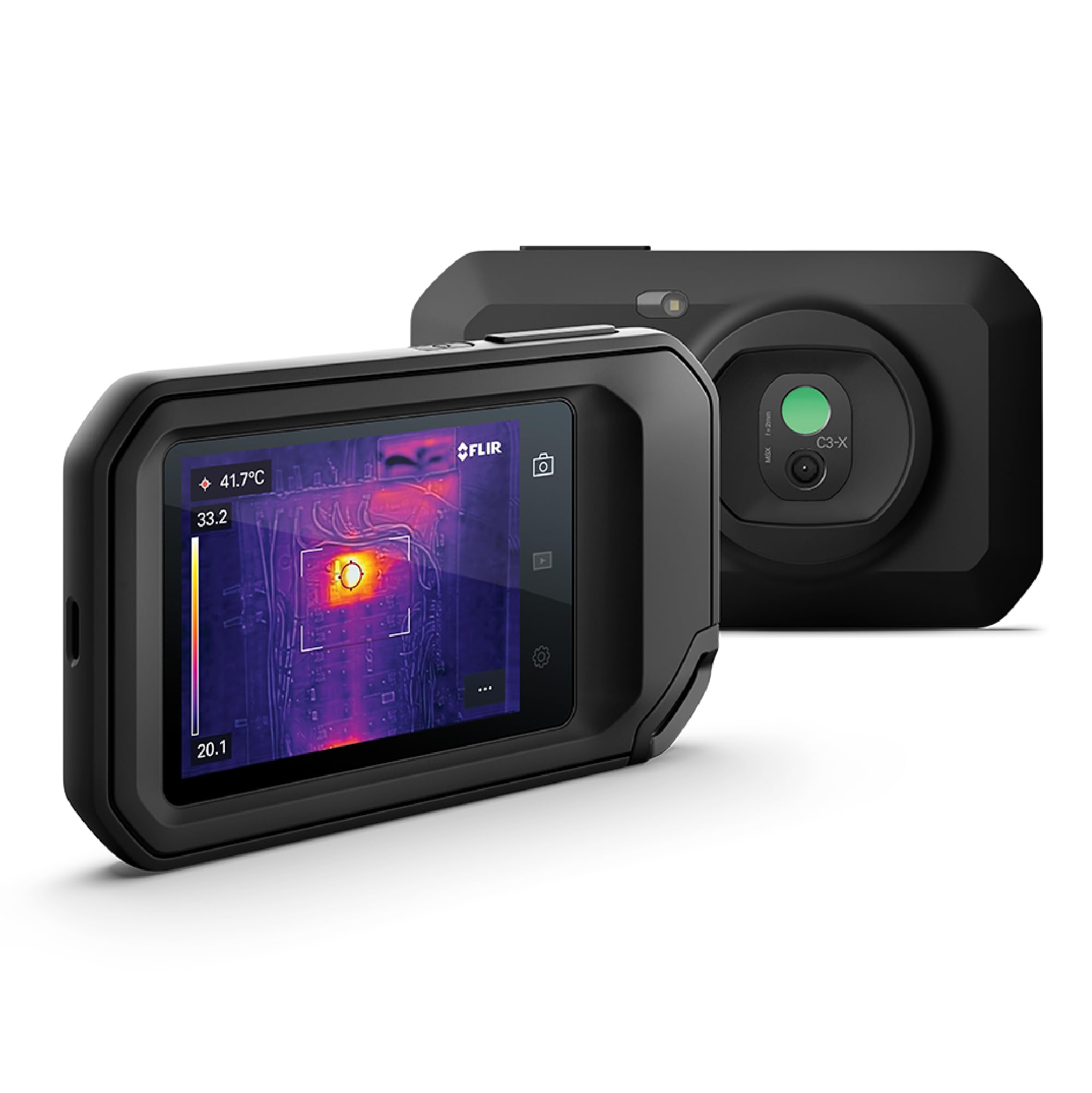
FLIR C3-X Compact WiFi Thermal Camera
MSX imaging to pinpoint electrical hot spots & loose terminals
Related articles
Critical neutral sizing for UPS systems under harmonic loading
During an audit of a data center with 85% IT load, the neutral conductor in the output feeder of a 200 kVA UPS exceeded 75 °C....
Survival of Measuring Instruments Against Transient Overvoltages: CAT III 1000V and CAT IV 600V Categories
Technical analysis on the survival of measuring instruments against transient overvoltages under CAT III 1000V and CAT IV 600V...
Triple Harmonics and Neutral Overheating in Automotive Plants with Welding Robots
In the contemporary electrical energy environment of high-density automotive manufacturing plants, the massive integration of r...