Subsynchronous resonance and torsional oscillations in hybrid operating rooms with isolated systems
Introduction and Fundamental Regulatory Framework
The integration of advanced hybrid operating rooms and isolated electrical systems (IT-Medical) into highly complex critical hospital infrastructures presents unprecedented electromagnetic and dynamic challenges. Unlike conventional industrial installations, the critical medical environment combines strongly nonlinear loads, wide bandgap semiconductor-based power converters, and high-impedance medical isolation transformers, which interact with the distribution network via cross-coupling phenomena. Subsynchronous Resonance (SSR) and torsional oscillations are no longer exclusive to high-voltage alternating current (HVAC) transmission systems with massive series compensation; today, they manifest in hospital microgrids and special installations due to the dynamic interaction between Active Harmonic Filters (AHF), the short-circuit impedance of encapsulated transformers according to the IEC 62271-200 standard, and the rotating shafts of emergency generator sets or rotary UPS systems.
The international regulatory framework demands a rigorous analysis that transcends conventional low- and medium-voltage design. The IEC 62271-200 standard regulates metal-enclosed high-voltage switchgear up to 52 kV, establishing dielectric testing criteria, internal arc behavior, and temperature rise limits that equipment must withstand when subjected to distorted current regimes. Concurrently, harmonic mitigation via Active Harmonic Filters (AHF) introduces the need to evaluate closed-loop stability at frequencies lower than the fundamental (subsynchronous), which can excite natural mechanical modes in cogeneration turbines or hospital backup diesel engines. This graduate-level technical document establishes the analytical foundations, mathematical modeling, forensic failure evaluation, and design strategies using the Vexten Suite to mitigate SSR and torsional oscillations in regulated environments.
Phenomenology of Subsynchronous Resonance (SSR) and Torsional Coupling Mechanisms
Subsynchronous resonance is a dynamic phenomenon in which the electric power system exchanges energy with the mechanical systems of rotating shafts at one or more natural frequencies that lie below the fundamental system frequency ( or ). When the complementary electrical frequency (, where is the frequency of the torsional mechanical mode) coincides with a natural frequency of the electrical system dominated by capacitances and leakage inductances, severe interactions occur, traditionally classified into two main categories: Torsional Interaction (TI) and Torque Amplification.
In the context of hybrid operating rooms and isolated systems, the presence of filtering capacitors for electromagnetic compatibility (EMC), long shielded cables, and the inductive impedance of isolation transformers creates a complex series-parallel LC resonant circuit. If the AHF control system injects currents with subsynchronous components due to poor tuning of Phase-Locked Loops (PLL) or excessive integral gain in the hysteresis loop, an apparent negative electrical resistance is generated at subsynchronous frequencies:
When the total effective electrical resistance (which includes transformer winding resistance, cable resistance, and negative resistance induced by converters and AHFs) becomes negative, the total damping of the mechanical-electrical system vanishes:
This negative damping scenario results in an exponential growth of torsional oscillations in the shaft of the generator set or critical HVAC compressors, leading to torsional fatigue of mechanical couplings, plastic deformation, and low-cycle fatigue fracture within minutes or hours of continuous operation under resonance conditions.
Dynamic Equations of the Coupled Electromechanical System
To accurately model the behavior of multiple masses interconnected by flexible shafts in the presence of harmonics and subsynchronous components, the state differential equation system based on Lagrangian formulation is employed:
Where is the moment of inertia matrix of the rotating masses (e.g., generator rotor, flywheel, prime mover), is the viscous and structural damping coefficient matrix, is the torsional stiffness matrix of the shafts, is the vector of rotor displacement angles, is the applied mechanical torque vector, and is the induced electromagnetic torque vector containing the harmonic and subsynchronous components originated by the nonlinear loads of the hybrid operating room X-ray equipment and the AHF converters.
Impact on Hybrid Operating Rooms and Isolated Systems (IT-Medical)
Hybrid operating rooms integrate high-power imaging systems (biplane C-arm angiographs, intraoperative CT, resonance navigation systems, or fluoroscopic X-rays) that demand short-duration, high-magnitude current pulses. These devices generate high-order harmonics (mainly characteristic harmonics , , , , as well as interharmonics due to the modulation of power inverters). To comply with strict electrical safety regulations in medical category critical areas according to the IEC 60364-7-710 standard, Isolated Power Supply Systems (IT-Medical) are implemented, which utilize medical isolation transformers with electrostatically grounded shields.
The interaction between the stray capacitance of the isolated network (especially in extensive operating rooms with shielded cabling for electromedical signals) and the leakage reactance of the isolation transformer creates parallel resonance frequencies that frequently fall within the interharmonic or low harmonic range. When Active Harmonic Filters (AHF) attempt to compensate for these distorted currents, the dynamic response of the AHF control loop can conflict with the isolated network impedance, causing transient overvoltages and low-frequency oscillations that directly affect the sensitivity of Insulation Monitoring Devices (IMD) and compromise supply stability toward life-support equipment.
Forensic Failure Analysis in Critical Components
A failure induced by SSR and torsional oscillations is not limited to the mechanical damage of rotating shafts; it triggers a chain of electromechanical and thermal destruction across the entire electrical distribution infrastructure. Below is the forensic analysis of failures observed in core components:
- Isolation and Distribution Transformers: Subsynchronous currents and direct current components (DC bias) generated by imperfect rectification in medical imaging equipment cause asymmetric saturation of the magnetic core. This exponentially increases core losses, generates a heavily distorted magnetizing current, causes mechanical vibrations in the core laminations induced by magnetostrictive forces at subsynchronous frequencies, and creates localized overheating in the windings that prematurely degrades solid insulation (Class H or higher).
- Medium and Low Voltage Cables: High-frequency current oscillations superimposed on the fundamental increase Joule losses due to the skin effect and proximity effect. Additionally, transient overvoltages associated with parallel resonance accelerate XLPE (Cross-linked Polyethylene) insulation degradation via recurring partial discharges within the dielectric microcavities.
- Medium Voltage Switchgear (IEC 62271-200): Circuit breakers, disconnectors, and metal-enclosed switchgear suffer mechanical fatigue in their operating mechanisms and busbars due to repulsive and attractive electrodynamic forces proportional to the square of the instantaneous current (). The presence of subsynchronous components prolongs current zero-crossing times, hindering electric arc extinction in SF6 or vacuum interrupter chambers, which can lead to catastrophic failures due to arc restrike and internal arcing faults according to IEC 62271-200 criteria.
- Protection Systems: Protection relays based on Discrete Fourier Transform (DFT) algorithms or True RMS filters can experience measurement errors or blocking in the presence of severe subsynchronous components, delaying fault clearance and allowing thermal and mechanical energy to destroy critical components.
Comparative Matrix of Parameters, Regulatory Limits, and Failure Consequences
The following table details critical electrical parameters, international regulatory limits (IEC / IEEE), and operational/dielectric consequences associated with the presence of SSR and harmonics in critical systems:
| Electrical / Mechanical Parameter | Reference Standard | Permissible Limit / Criterion | Critical Failure Condition | Operational and Dielectric Consequence |
|---|---|---|---|---|
| Voltage Total Harmonic Distortion (THDv) | IEC 61000-2-4 / IEEE 519 | THDv < 5% (Industrial/Medical Environment) | Sustained THDv > 8% with interharmonics | Parallel resonance, capacitor overheating, and dielectric breakdown. |
| DC Bias Saturation Current in Transformers | IEC 60076-1 / IEEE C57.12.00 | due to X-ray equipment | Asymmetric core saturation, high inrush currents, and subsynchronous vibration. | |
| Torsional Oscillation Amplitude in Shafts | IEEE Std 1195 / IEEE Std 421.5 | Mechanical stress < 30% of fatigue limit | Cyclic stress exceeding the yield limit | Severe torsional fatigue, coupling cracks, and catastrophic shaft fracture. |
| Insulation Resistance in IT-Medical Networks | IEC 60364-7-710 / IEC 61557-8 | (alarm threshold) | due to dielectric degradation | Loss of insulation, hazardous leakage currents for the patient (macroshock/microshock). |
| Internal Arc Behavior in MV Switchgear | IEC 62271-200 (IAC Classification) | AFLR Classification 25kA / 1s without enclosure opening | SSR overvoltages generating internal dielectric failure | Switchgear explosion, projection of incandescent gases, and total service outage. |
Design, Mitigation, and Advanced Modeling Strategies
To guarantee the immunity of hybrid operating rooms and isolated systems against SSR and torsional oscillations, a comprehensive design strategy must be implemented encompassing active filtering topology, control system parameterization, and strict equipment sizing in compliance with current standards.
Design and Tuning of Active Harmonic Filters (AHF)
AHFs must be configured with multi-band control algorithms based on proportional-resonant (PR) controllers tuned not only to characteristic harmonic frequencies, but also equipped with Virtual Damping functions to counteract negative electrical resistance at subsynchronous frequencies. The transfer function of the AHF control loop is modeled to introduce a controlled phase shift guaranteeing gain and phase stability:
Additionally, the wideband response of the AHF converter PLL must be limited () to prevent the fast dynamics of the phase tracker from interacting with the diesel generator torsional modes, thereby preventing cross-coupling instability.
Practical Application and Analysis via Vexten Suite
In the advanced engineering workflow using the Vexten Suite, power cable sizing for hybrid operating rooms is rigorously executed under the IEC 60287 standard (for ampacity calculation and losses under steady-state and transient regimes) and the NEC 310 standard for harmonic correction factors. Since harmonic current and subsynchronous components increase skin-effect losses, the harmonic derating factor () is calculated via the following expression implemented in the Vexten calculation engine:
Where is the fundamental current, is the harmonic current of order , and is the loss increase factor due to skin and proximity effects in the conductor at harmonic frequency . The Vexten Suite software automatically processes current spectra measured in complex medical installations to apply this derating factor, preventing premature overheating of cable insulation within closed raceways.
Likewise, for short-circuit analysis and harmonic load flows according to IEC 60909 and IEEE 141 standards, the Vexten Suite performs a modal analysis of the electrical network, calculating positive, negative, and zero sequence impedances, and identifying critical series and parallel resonance points across the 0 Hz to 3 kHz spectrum. This allows strategic placement of AHFs and sizing of line reactors (with a typical impedance of to ) to shift resonance frequencies outside the excitation range of the hospital's rotating equipment torsional modes.
Conclusions and Engineering Guidelines
Subsynchronous resonance and torsional oscillations in hybrid operating rooms and isolated systems represent a critical risk extending beyond conventional power quality, affecting the structural integrity of generation assets and the dielectric safety of hospital infrastructure. The strict application of IEC 62271-200 for switchgear, IEC 60364-7-710 for medical installations, and the use of advanced modeling tools such as the Vexten Suite (integrating IEC 60909, IEC 60287, and IEEE 141) are indispensable to ensure robust designs. The incorporation of virtual damping algorithms in Active Harmonic Filters and strict control of PLL loops ensure the dynamic stability of the electromechanical system, protecting both critical installation assets and patient lives in the operating room.
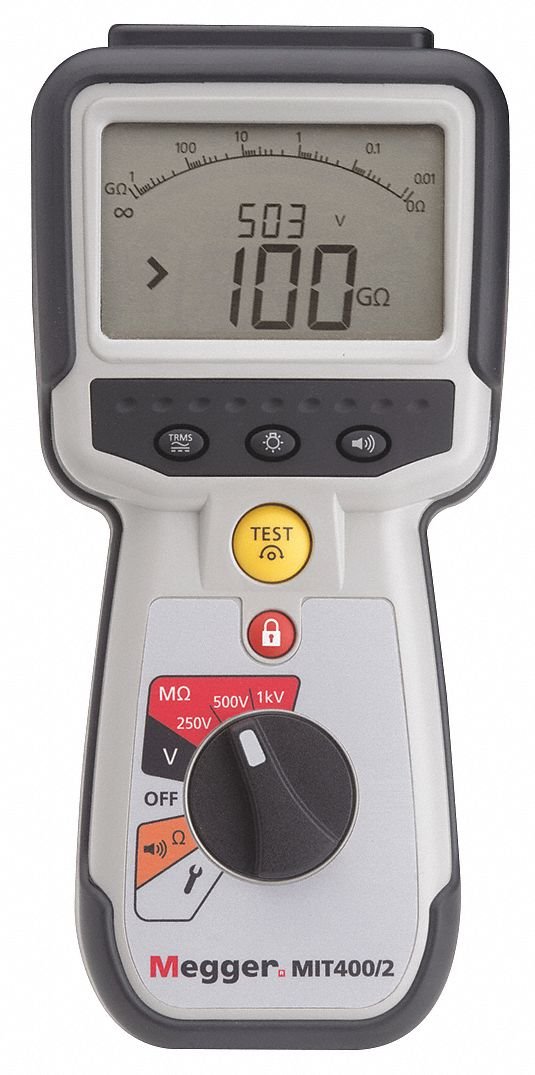
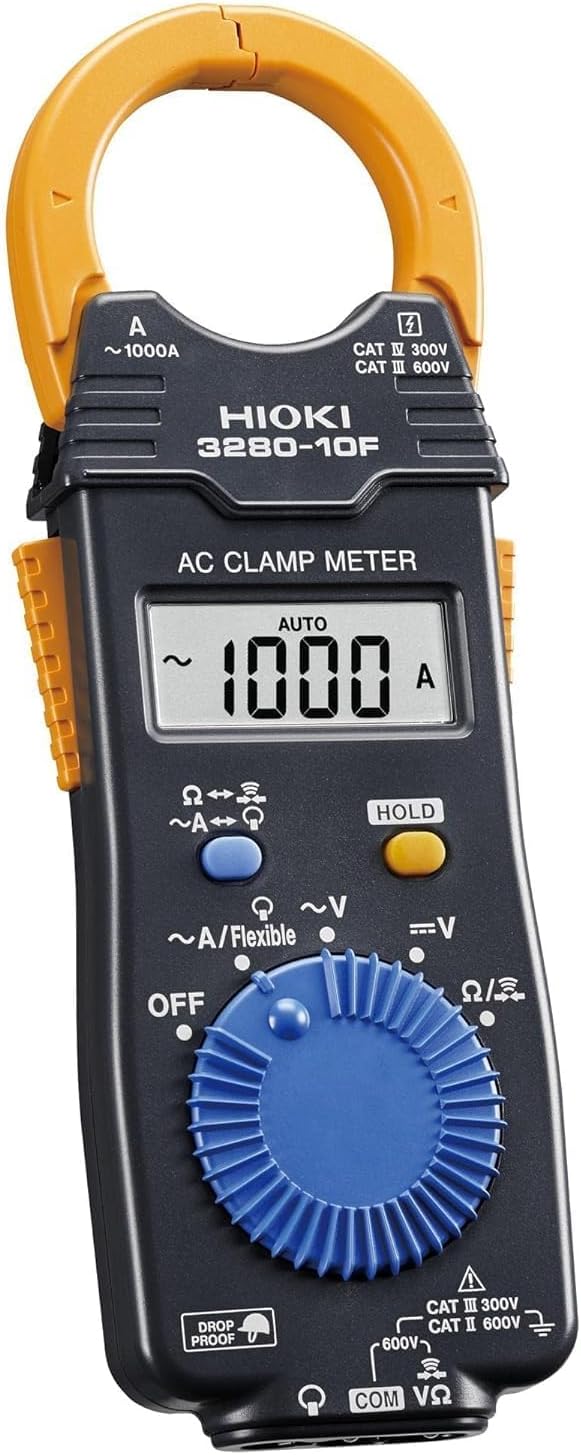
Related diagnostic instruments
Measurement equipment commonly used to verify this scenario in the field.
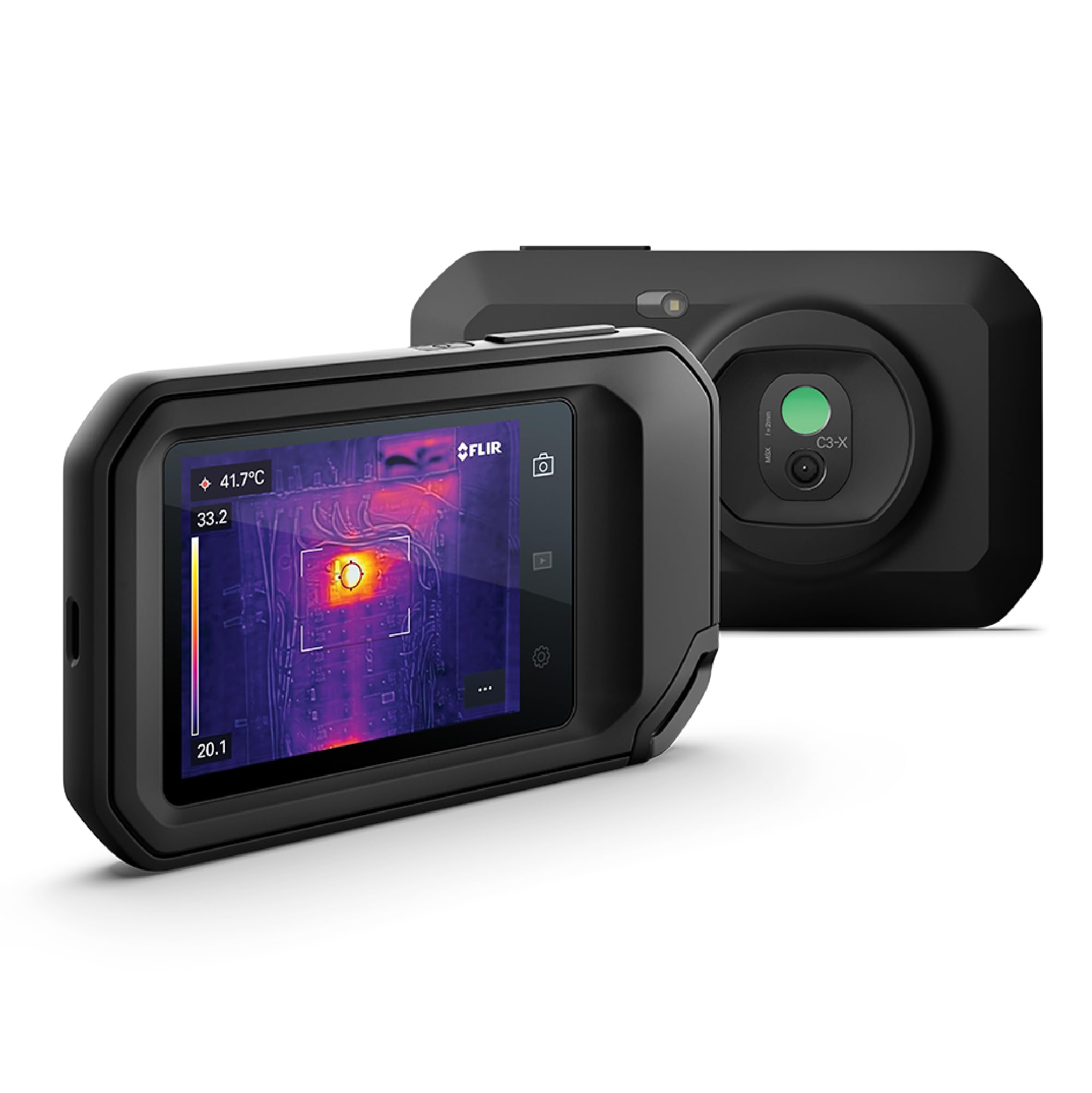
FLIR C3-X Compact WiFi Thermal Camera
MSX imaging to pinpoint electrical hot spots & loose terminals
Related articles
Advantages of IT grounding systems in hospitals, operating rooms, and continuous industrial processes: insulation monitoring devices
In the engineering design of critical electrical power distribution infrastructure, the selected earthing system philosophy dic...
Operational continuity: IT earthing systems and insulation monitoring
The IT (Isolated-Terra) power distribution system, governed by international standards such as IEC 60364-4-41 and the National...
Comparative analysis of earthing systems: TT, TN, and IT
The safety of low-voltage electrical installations and the operational reliability of power distribution systems depend critica...