Star-Delta starter vs Soft Starter: torque and current transient comparison
Introduction and Fundamental Theoretical Framework of the Induction Motor
The three-phase squirrel-cage induction motor constitutes the backbone of industrial electromechanical drives within the Vexten ecosystem. Its robust design and constructive simplicity contrast sharply with the inherent complexity of its electromagnetic and dynamic transient behavior during the starting phase. From the perspective of electromagnetic field theory and magnetically coupled circuits, the motor is modeled via the Blondel-Kloss per-phase equivalent circuit (referred to the stator), where the starting current is limited almost exclusively by the leakage impedance and the rotor resistance reflected through the effective transformation ratio.
When an induction motor is connected directly across the supply line (Direct-On-Line or DOL), the initial slip is . Under this operating condition, the equivalent circuit demonstrates that the motor's input impedance is remarkably low, inducing transient inrush currents that typically oscillate between and times the rated current (), accompanied by extremely poor initial power factors (). This massive current demand generates severe voltage drops across the upstream distribution network's impedance, adversely affecting sensitive loads connected to the same electrical node and subjecting the stator windings to severe electrodynamic stresses proportional to the square of the instantaneous current.
To mitigate these impacts, classical and modern electrical engineering has developed various starting topologies. Among traditional methodologies, the star-delta () starter stands out—an electromechanical method that manipulates the connection topology of the stator windings. In contrast, technological evolution has consolidated the static soft starter, a power electronics-based device that employs phase-control semiconductors (antiparallel Thyristors or SCRs) to continuously and controllably regulate the root-mean-square (RMS) voltage applied to the motor terminals. The fundamental objective of this technical document is to provide an exhaustive, comparative, and graduate-level analysis of electromagnetic torque behavior and current transients under both starting philosophies, integrating international IEEE and IEC standards, forensic failure analysis, and advanced design methodologies implemented within the Vexten Suite platform.
Thermodynamic and Electromagnetic Analysis of the Star-Delta Starter
The operating principle of the star-delta method is founded upon the geometric alteration of the voltages applied to each individual phase of the motor's stator winding. For this method to be applicable, the motor must be designed with its six terminals accessible and must operate nominally in a delta configuration with a line voltage equal to the rated phase voltage of the winding ().
During the initial starting stage, the contactors are configured such that the stator windings are connected in a star formation. In this topology, the voltage applied to each individual phase of the winding is reduced by a factor of :
Given that the electromagnetic torque developed by an induction motor within the linear zone of its torque-slip characteristic is directly proportional to the square of the applied stator voltage (), the voltage reduction in the star configuration generates a drastic drop in the starting torque capability. Specifically, the initial star torque is reduced to one-third of the torque that would be obtained via a direct-on-line (DOL) start:
Simultaneously, the line current drawn by the motor during the star phase is reduced in the exact same proportion as the voltage, provided that the load impedance remains constant within the initial linear domain:
However, the most critical limitation of the star-delta starter lies in the severe transient phenomenon that occurs during the mechanical and electrical transition from the star to the delta circuit. When the motor reaches approximately to of its synchronous speed, a timer triggers the opening of the star contactor and the closing of the delta contactor. During this dead-time interval (typically oscillating between 20 ms and 80 ms), the motor is completely disconnected from the power supply, operating as a decoupled synchronous/asynchronous generator whose residual magnetic flux in the airgap induces a rotational electromotive force (EMF) in the stator windings.
When the delta contactor closes, the motor is reconnected to the grid with an arbitrary phase difference between the grid voltage and the rotor-induced EMF. This out-of-phase or counter-phase closing condition generates a severe inrush current transient and a mechanical transient torque peak that can far exceed the system's nominal short-circuit values. Mathematically, the transient current during the transition is modeled via the superposition of the steady-state component and the aperiodic direct-current component:
Where is the stator transient time constant. In the worst-case scenario, where closure occurs with a phase displacement angle of , the peak transient current can reach values of up to to times the original direct-on-line starting current, partially or totally nullifying the intended current-limitation benefit and subjecting the motor shaft, mechanical couplings, and gearboxes to destructive torsional stress.
Architecture and Dynamic Behavior of the Static Soft Starter
The static soft starter represents a paradigmatic shift in the control of medium- and low-voltage induction motors, substituting electromechanical switching with static power semiconductor modulation. The central power element consists of a three-phase array of thyristors (SCRs) connected in antiparallel per phase, operated via Phase Angle Control (PAC) techniques or pulse-train control.
Through the precise variation of the firing angle of the thyristors during the starting sequence, the soft starter modifies the RMS value of the sinusoidal alternating voltage applied to the motor terminals. The output RMS voltage per phase as a function of the firing angle is expressed via the following control integral:
Torque and current control during starting is achieved through closed-loop control algorithms implemented in high-performance microcontrollers (DSPs). The most advanced operational modes available in the Vexten industrial standard include:
- Constant Voltage Ramp: Applies a gradual voltage increase from an initial pedestal value () up to the rated voltage, enabling a smooth start while maintaining direct dependence on the load curve.
- Constant Current Limitation: Maintains the starting current below a preset threshold (e.g., ) regardless of the load's resistive torque profile, which is ideal for applications with severe distribution network capacity restrictions.
- Adaptive Torque Control (ATC): Modulates the thyristor firing angles in real time based on a dynamic mathematical model of the motor to ensure strict linear acceleration, eliminating mechanical jerks ("water hammer" in pumps or slippage on conveyor belts).
Unlike the star-delta starter, the soft starter completely eliminates mechanical discontinuity and switching transients. There are no mechanical contacts opening under heavy inductive load during the acceleration ramp, which prevents electric arcs and sharp voltage sags. However, the introduction of thyristor phase control entails the inherent generation of low- and medium-frequency harmonics in the system current due to the distortion of the pure sinusoidal wave. The characteristic harmonic content of the line current in a six-pulse phase-control converter complies with the mathematical relationship:
Where and , resulting in dominant harmonic orders of , which must be rigorously evaluated to prevent resonance in transformers and the saturation of adjacent magnetic cores.
Exhaustive Comparative Matrix: Star-Delta vs. Static Soft Starter
To establish a rigorous engineering selection criterion for high-demand projects, the following table details a multidimensional technical comparison based on international standards (IEEE and IEC):
| Electrical / Mechanical Parameter | Star-Delta Starter () | Static Soft Starter | Reference Standard / Specification |
|---|---|---|---|
| Maximum Starting Current | to of DOL current (Fixed and unalterable). | Continuously adjustable, typically from to . | IEC 60947-4-1 / IEEE Std 141 |
| Initial Starting Torque | Restricted to of nominal DOL torque (Non-configurable). | Dynamically adjustable from up to of nominal torque. | NEMA MG 1 / IEC 60034-12 |
| Switching Transient | Severe (Current peaks and transient torque up to ). | Non-existent (Smooth transition without contact opening under load). | IEEE Std 399 / IEC 60204-1 |
| Harmonic Content () | Low (Limited to switching transients and grid background harmonics). | Elevated during the acceleration ramp (Presence of 5th, 7th, 11th, 13th harmonics). | IEEE Std 519 / IEC 61000-3-4 |
| Mechanical and Thermal Wear | High in mechanical contacts and severe coupling stress due to jerks. | Low (Critical reduction of torsional mechanical stress in shafts and gearboxes). | AGMA 6010 / ISO 10816 |
| Motor Cabling Requirements | Requires 6-conductor cabling (Motor with accessible windings). | Standard 3-conductor cabling (Conventional delta configuration). | NEC Article 430 / IEC 60364-5-52 |
Forensic Failure Analysis of System Components
Incorrect sizing or inappropriate selection between a star-delta starter and a static soft starter triggers destructive failure mechanisms that compromise the integrity of electrical assets. Below is a forensic breakdown of critical failure points:
Distribution Transformer Failure Due to Inrush Currents and Switching Transients
In the star-delta scheme, the counter-phase transition phenomenon generates high-frequency current components with severe aperiodic components. When this transient current flows through the plant's distribution transformer, it provokes a transient saturation of the magnetic core. The magnetic flux density exceeds the saturation knee of the silicon steel hysteresis curve of the transformer:
This sudden magnetic saturation drastically reduces the transformer's instantaneous short-circuit impedance, generating deep voltage sags on the main bus and local overheating in the windings due to eddy currents and augmented hysteresis losses. In extreme cases, this results in the nuisance tripping of differential or instantaneous overcurrent protections (50/51).
Thermal and Electrodynamic Fatigue in Power Cables
The use of star-delta starters necessitates running six independent conductors from the control panel to the motor frame. During frequent starting maneuvers, the electrodynamic forces between parallel conductors caused by high virtual short-circuit currents during switching are calculated via the modified Biot-Savart law for forces per unit length:
These pulsating mechanical forces generate fatigue in cable trays and deformation of the polymeric insulation (XLPE or EPR). Additionally, the heat accumulated from resistive losses () during prolonged starts accelerates the thermal aging of the insulation, reducing the cable's service life in accordance with the modified Arrhenius equation for dielectric materials.
Dielectric Stress and Switching in Switchgear
The electromechanical contactors utilized in star-delta systems operate under severe utilization category conditions per IEC 60947-4-1 (AC-3 and AC-4). The opening of the star contactor during transition occurs while the motor is still drawing significant inductive current. This generates an electric arc across the main contacts that erodes the contact material (cadmium oxide-silver or silver-nickel alloys). If the opening speed is insufficient or the arc-extinction medium collapses, contact welding occurs, resulting in a catastrophic phase-to-phase three-phase short circuit.
Design, Mitigation Strategies, and Vexten Suite Methodology
The effective mitigation of electromagnetic and harmonic transients requires the application of design methodologies based on international standards and high-fidelity computational tools. The Vexten Suite platform integrates advanced algorithms for transient and steady-state modeling of industrial networks.
Short-Circuit and Voltage Drop Modeling (IEC 60909 / IEEE Std 141)
To correctly size the electrical infrastructure that will support a starting system, Vexten Suite executes dynamic load flow simulations, calculating the equivalent system impedance up to the motor terminals. The percentage voltage drop during the starting transient is computed via the matrix expression:
Where and represent the equivalent resistance and reactance of the system at the point of common coupling, and is the network impedance angle. If exceeds the normative threshold of on critical process buses, Vexten Suite automatically recommends the mandatory transition toward a static soft starter or a frequency converter (VFD), sizing the optimal ramp parameters to maintain system stability.
Cable Derating and Sizing for Harmonic Content (IEC 60287 / NEC 310)
When a static soft starter is implemented, the flow of harmonic current increases supplementary losses in conductors due to the skin effect and proximity effect. Vexten Suite applies the harmonic reduction factor () in accordance with IEC 60287 to correct the allowable current-carrying capacity () of the cable:
This calculation prevents the premature overheating of motor feeder conductors, ensuring strict compliance with the thermal limits established by the NEC (National Electrical Code).
Resonance Mitigation and Power Factor Compensation
A critical design error in industrial installations occurs when fixed power factor correction capacitor banks are connected to the same bus where a static soft starter operates. The interaction between the transformer leakage inductance () and the capacitor bank capacitance () forms a parallel resonant tank circuit that can tune into the 5th or 7th order harmonics generated by thyristors during the power-up ramp.
The characteristic resonant frequency is calculated via:
Where is the short-circuit power of the bus and is the reactive power of the capacitor bank. If coincides with a dominant harmonic frequency, magnified resonance currents are produced that destroy capacitor fuses and provoke catastrophic dielectric failure. To counteract this, Vexten Suite's calculation engine automatically sizes detuned filter reactors (typically tuned to , corresponding to for 50 Hz networks), shifting the resonant frequency below the lowest harmonic order present in the system.
Technical Conclusions
The selection between the traditional star-delta starter and the modern static soft starter must not be based exclusively on initial capital cost (CAPEX) criteria, but rather on a comprehensive analysis of the lifecycle (OPEX), process reliability, and the preservation of electromechanical asset integrity. While the star-delta system offers an economical and robust solution for low-inertia loads with lax regulatory constraints, its mechanical counter-phase transition introduces destructive current and torque transients. Conversely, the static soft starter provides superior kinematic and electrical control, eliminating mechanical jerks and allowing precise management of starting current, at the cost of rigorous harmonic management and electromagnetic compatibility (CEM) considerations. The utilization of advanced engineering tools such as Vexten Suite guarantees that every drive is modeled, sized, and protected under the highest standards of contemporary electrical engineering.
Related diagnostic instruments
Measurement equipment commonly used to verify this scenario in the field.
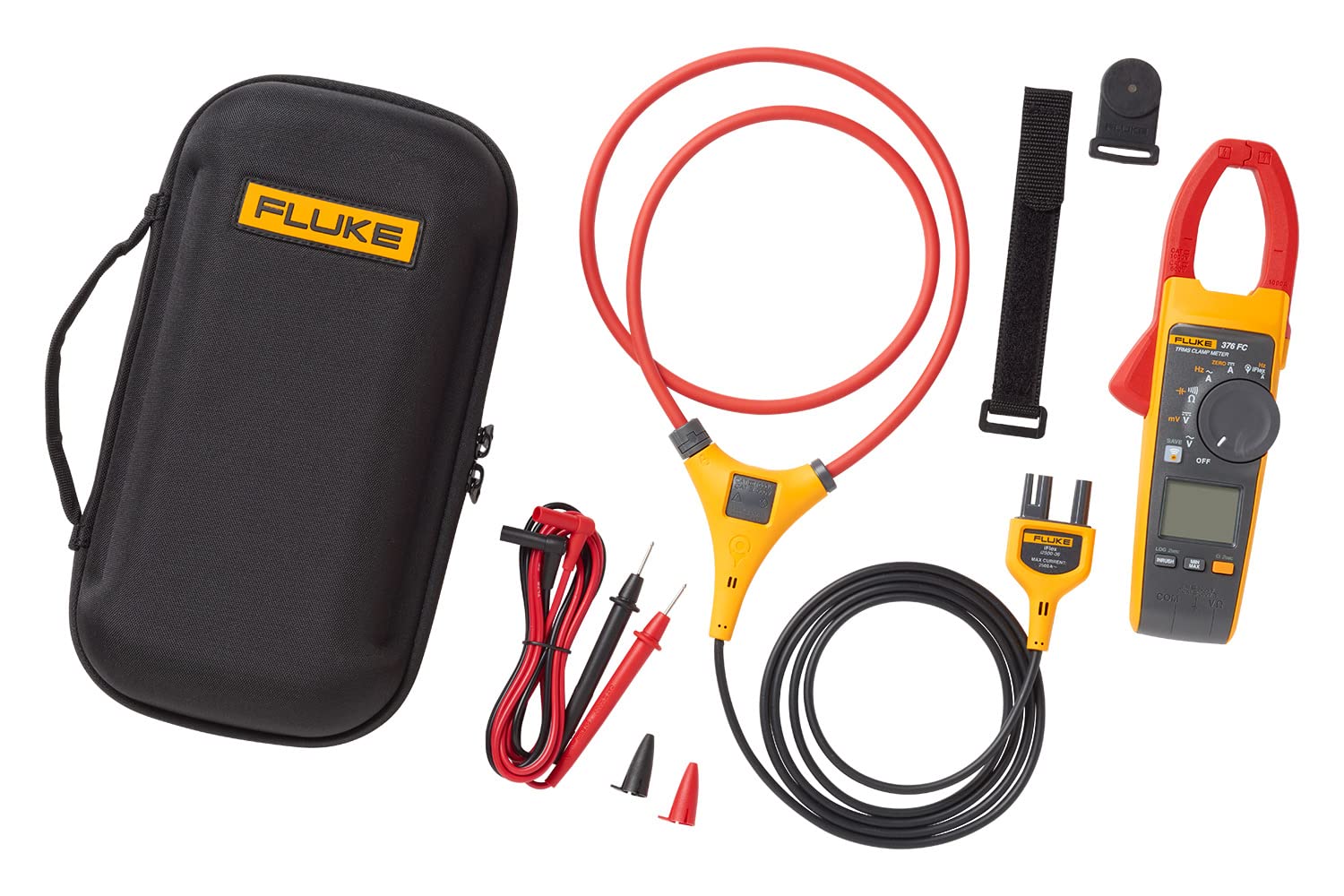
Fluke 376 FC Clamp Meter with 2500A iFlex Probe
Motor inrush logging and flexible probe reaches up to 2500A
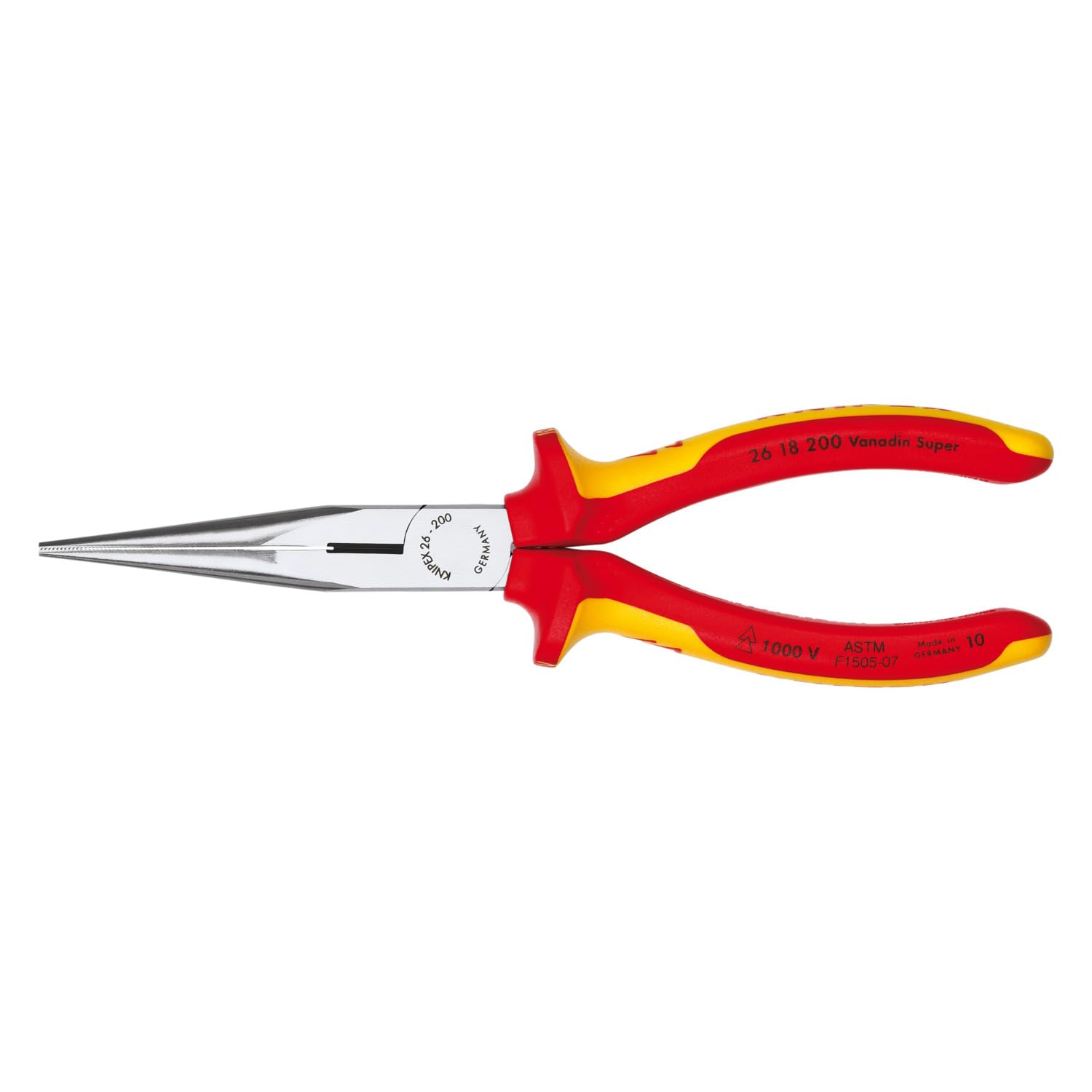
KNIPEX 1000V VDE Insulated Pliers (Made in Germany)
Individually tested to 10,000V under IEC 60900 safety standards
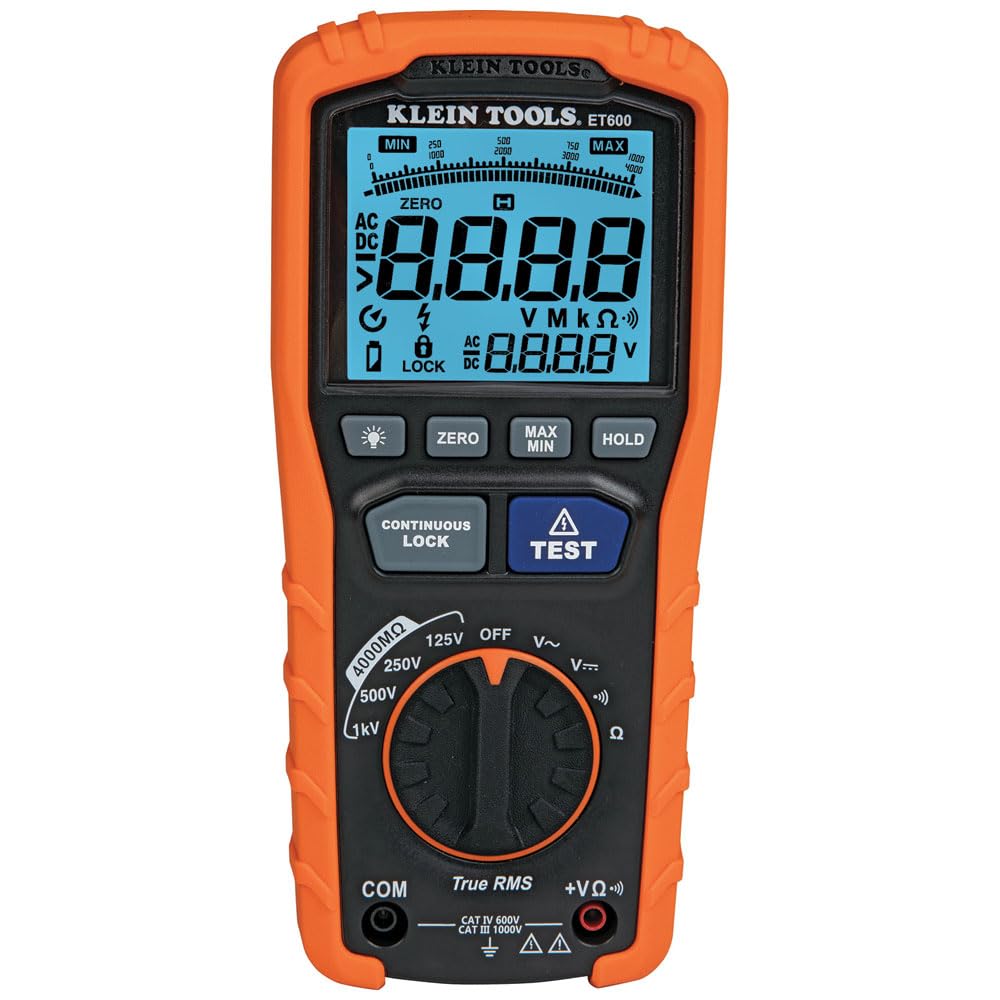
Klein Tools ET600 Digital Megohmmeter Tester
Budget-friendly 125V to 1000V insulation resistance tests
Related articles
Star-Delta Starter vs Static Soft Starter: Torque and Current Transient Analysis
Rigorous analysis of the dynamic behavior of three-phase squirrel-cage induction motors during the starting transition demands...
Torque Pulsation and Torsional Resonance in Large VFD-Fed Induction Motors
Forensic analysis of torque pulsation and torsional resonance in large VFD-fed motor shafts according to IEEE 1566 and IEC 6003...
Line reactors and dV/dt filters vs sine wave filters at VFD output
Variable Frequency Drive (VFD) systems based on Pulse Width Modulation (PWM) inverter topologies utilizing Insulated Gate Bipol...